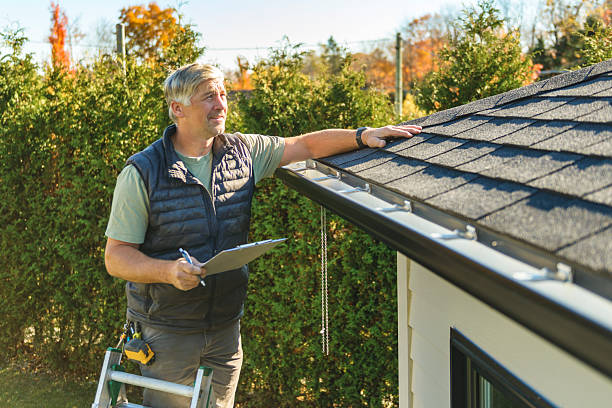
A torn-up roofline after a storm isn't a "get to it next week" problem, and we don't treat it like one — Roof Repair Smedway answers, scopes the damage, and dispatches a crew across Twin Falls fast.

Before Roof Repair Smedway was a name on a truck, our foremen were already up on ladders across Twin Falls, ID, figuring out which shingle brands actually hold their seal through a rough season and which ones just look good in a showroom.
We don't treat licensing as a formality — it's proof that the person on your roof knows what they're doing and that you're covered if anything goes sideways.
A roof repair that's "close enough" tends to fail again within a year, usually during the exact storm it was supposed to handle. We don't build that way.

Documentation on request, no exceptions.
Storms don't wait for office hours, so our on-call line doesn't either.
Every price is itemized, not eyeballed over the phone.
Crews dispatched from within Twin Falls, ID, not another region entirely.
Catching a roof problem at the "annoying" stage is almost always cheaper than catching it at the "emergency" stage.
The earlier one of these signs gets a proper look, the smaller the repair usually stays; waiting rarely makes a roof problem cheaper to fix.
Shingles shed their protective granules as they wear down, and a gutter full of grit is an early tell.
A cupped shingle traps moisture instead of shedding it, which speeds up decking rot underneath.
Daylight visible through the attic roof boards means water has the same path in.
A spreading brown ring on a ceiling almost always means water is tracking in from somewhere on the roof.
An unexplained bill increase is worth checking against your roof's condition.
A bare patch after high wind is a direct gap in your roof's weather barrier that needs covering right away.
We split our work into specific service lanes because a wind-lifted shingle and a full system replacement need completely different crews and timelines.
Below is the full breakdown of what we cover in Twin Falls, so you can see roughly where your situation fits before you even call.
Downed branches, torn flashing, and wind-lifted shingles all fall under our emergency response scope.
From a few cracked shingles to a complete tear-off, residential jobs get scoped against manufacturer spec, not a rough guess.
Commercial roofs run different membrane systems entirely, and our crews are trained specifically on TPO, EPDM, and modified bitumen.
Material selection is part of the replacement conversation, matched to your climate exposure and budget.
Scheduled maintenance catches loose flashing and clogged valleys before the next storm turns them urgent.
Chimney crickets, skylight seals, and valley flashing are common leak points that general repair crews often miss.

Four steps, no surprises in between — here's exactly what happens after you pick up the phone.
After-hours calls still reach a live line for anything time-sensitive.
The inspection covers decking, flashing, and ventilation, not just the obvious visible damage.
Every figure is documented in writing — nothing verbal, nothing vague.
Once approved, the crew completes the work to manufacturer spec and cleans the site before leaving.
If you've been burned by a roofing company before, these are the specific things we do differently, not just a promise that we're "better."
Being local means we're rarely the crew still driving in from somewhere else.
We'd rather lose a bid on an honest price than win one that grows later.
Our installers follow manufacturer spec on every underlayment overlap and fastener pattern, not general guesswork.
We'd rather send a crew back for a small fix than leave a homeowner unsure.
Storm-damage jobs come with documentation formatted for how most Twin Falls, ID adjusters review claims.
Our technicians explain their reasoning so you're deciding with full information.

A verbal promise means nothing when you actually need it, so ours is documented and handed over at project close.
We also guarantee the number on your estimate — barring a scope change you approve first, that's the number on your invoice.
We'd rather explain a guarantee in plain language upfront than have a homeowner discover the fine print later.
We stage crews across Twin Falls, ID so a storm hitting one part of the region doesn't leave the rest of Twin Falls waiting.
Routes are planned around Twin Falls's actual streets and access points, not a generic radius drawn on a map, which is part of why our arrival windows tend to hold up.
Coverage decisions are based on actual drive time from the nearest staged crew, not a fixed distance line on a map.

"Full reroof took three days. Cleanup was better than we expected — not a nail left in the yard."
— Twin Falls Homeowner
"Our adjuster actually commented on how thorough the documentation was. Made the claim process a lot smoother."
— Twin Falls Homeowner
"They talked us out of a full replacement we didn't actually need. Repaired the flashing instead."
— Twin Falls Homeowner
"New ridge vent noticeably dropped our attic temperature. Wasn't expecting that big a difference."
— Twin Falls Homeowner
"Chimney cricket repair stopped a ceiling stain that had been there for months."
— Twin Falls Homeowner
"Commercial building had a slow roof leak affecting a whole storage room. Their team traced it to a single failed pitch pan and fixed it in one visit."
— Twin Falls Homeowner
Get a straight answer before any work starts.
Speak To A Roofer Now